










A Magical Invitation
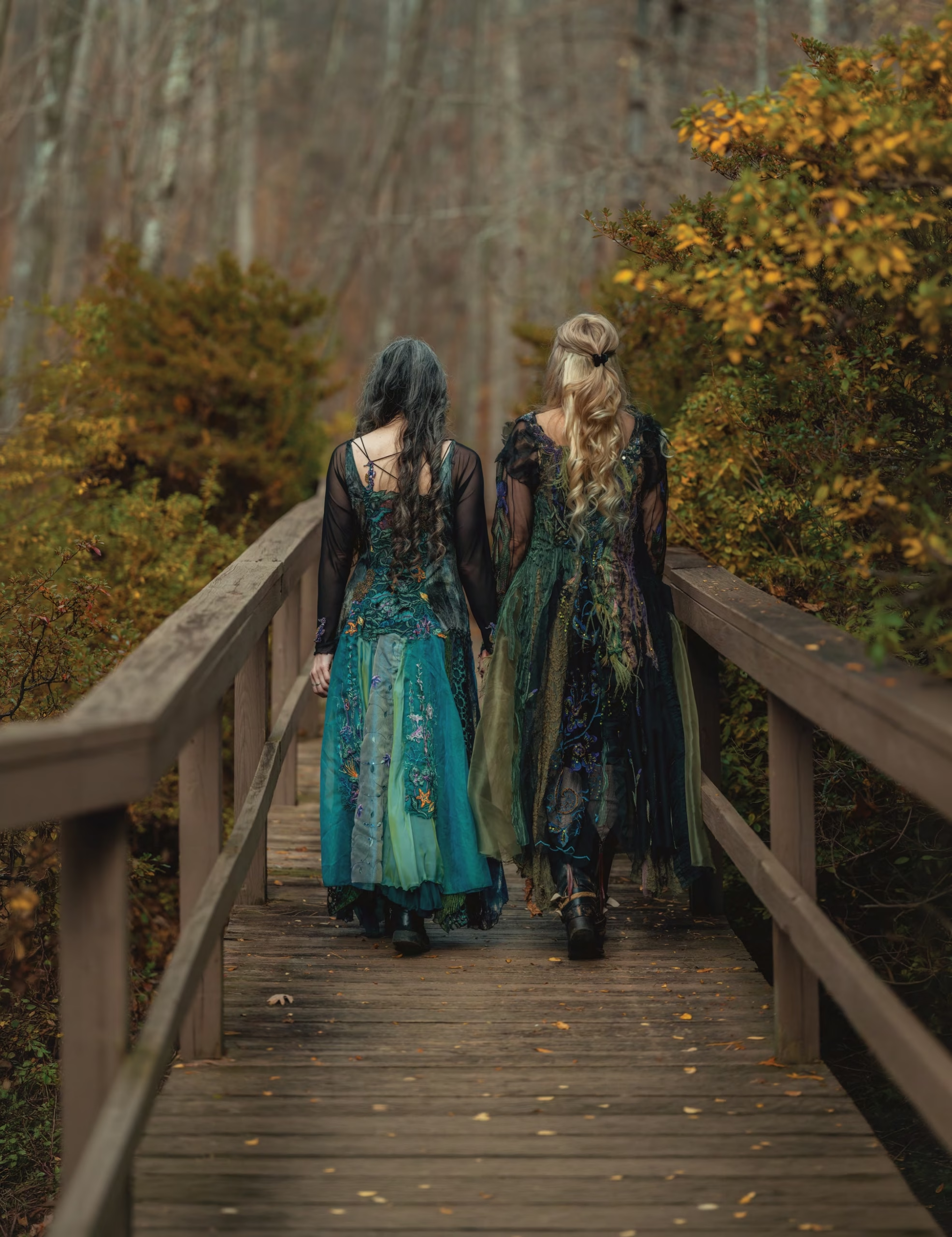
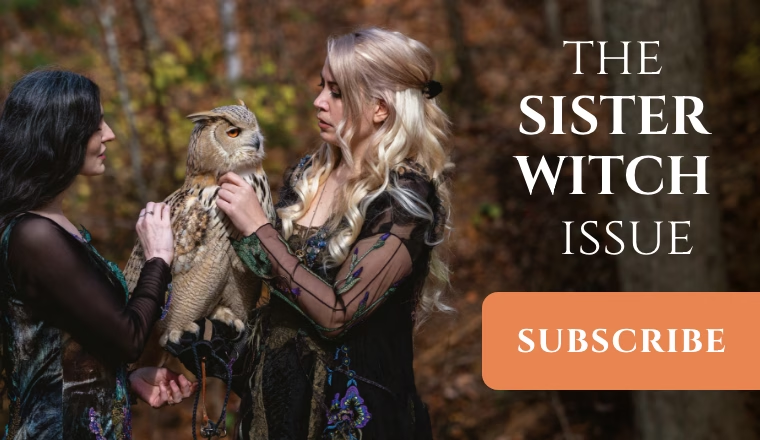
When my sister and I were young, we were the best of friends—when we weren’t the best of enemies, that is. Imagine two sisters: one with hair as bright as a summer day, the other with hair as dark as a winter night, with glints and spangles of starlight woven through it. In other words, my sister Angelica was blonde like our father, the miller for our village and the farms in the valley, while I had inherited my mother’s black tresses. She was a respected witch, with a master’s degree in witchcraft. She had grown up in the city but had fallen in love with my father and moved to the countryside for his sake. I got my father’s name: His Robert became my Roberta. My sister was named after my mother’s favorite herb, Angelica archangelica, also called wild celery. That’s what I used to call her when I was mad at her—“Hey, Celery!”
To be fair, we were both a little wild. My mother believed in giving children, especially girls, as much freedom as possible, and my father believed his wife was the wisest woman in the world, who knew how to do just about everything—even fix the plumbing in our ancient cottage beside the millstream. Sometimes in summer my sister and I would roam in the forest on the mountainside from morning to night, playing with foxes, teasing the weasels, singing with the toads in the forest pools.
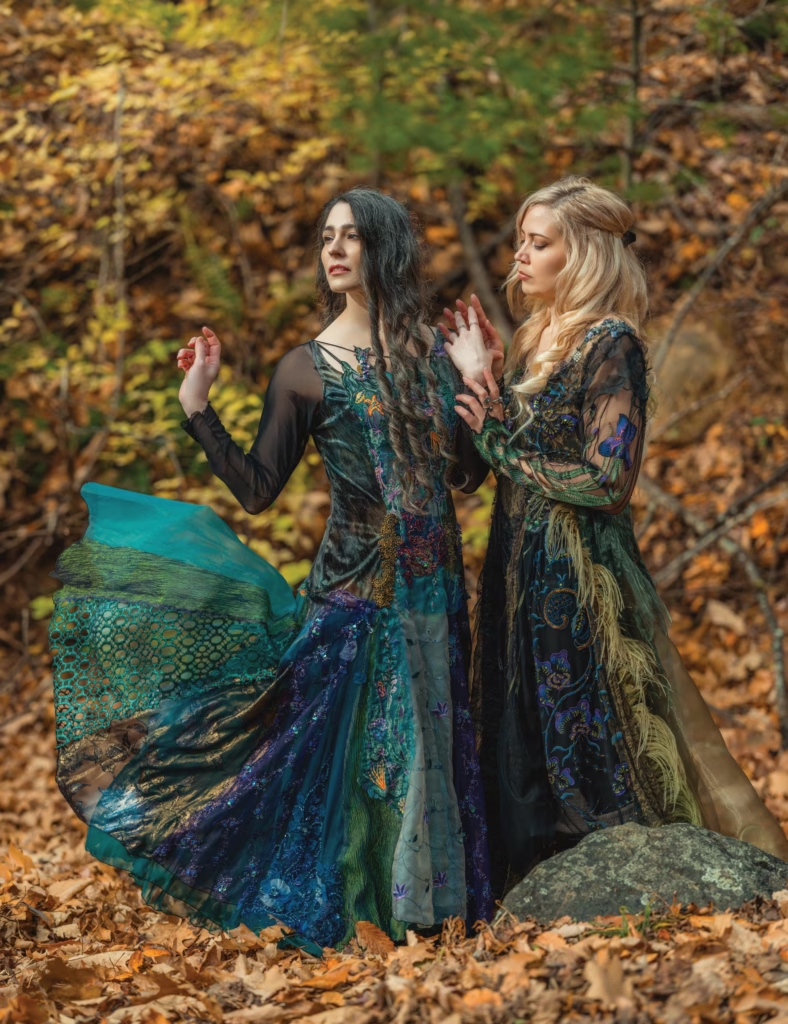
When we were young, we were constant companions.
I don’t know how we grew apart—who knows how such things begin? Angelica had a gift for foretelling the future. She would lay out the cards or examine the dregs left in a teacup, and it was like a newspaper to her. She could tell you what had happened, what was happening, what might happen, and why—sometimes even how to avoid it. She always said the future could be altered, mostly. I had a different gift: I could brew potions. A sip from one of my potions and you could fall in love, or fall out of love, or heal from a broken heart. Two sips could lift the black cloud that hung over your moods; three could help you study for your mathematics exam.
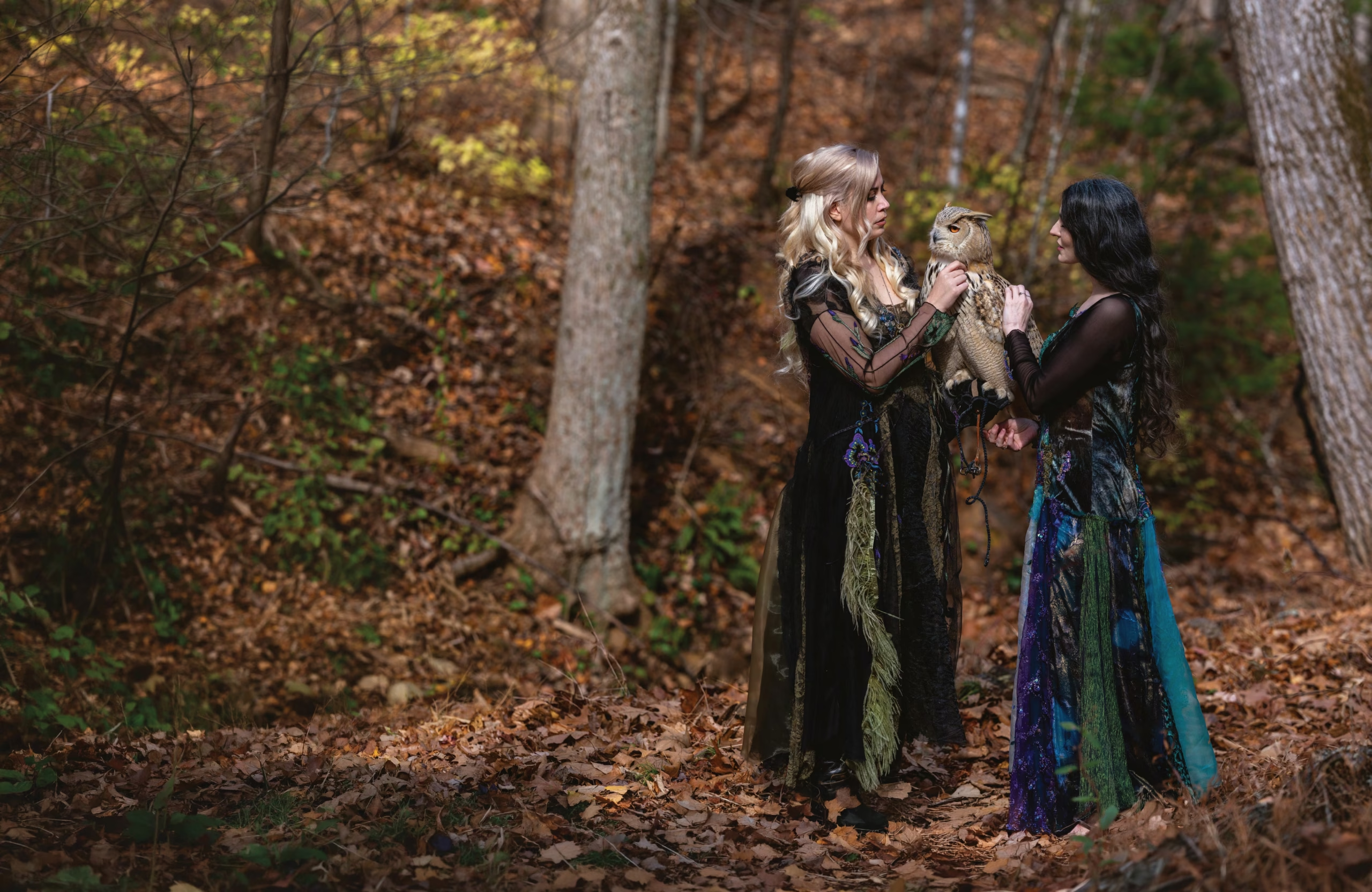
As we grew older, Angelica continued to roam in the forest, speaking with animals—one day, she brought home an owl that had been wounded by hunters. My mother and I brewed a potion that healed its wings, and ever after Pandora (named after the goddess of gift-giving) would perch on the back of an armchair while my sister was reading the cards, looking down at them as though she could read them too. However, I no longer went to the forest except to gather roots and herbs. Potion-making is a complicated art. It takes a lot of training. My sister read the cards or saw visions at the bottom of a teacup by instinct; she did not need to be taught. But my art required scientific knowledge—get one ingredient wrong, and I could poison someone unintentionally! At first I studied with our mother, but eventually she told me that I should study at the university with her old botany professor. He would teach me all the things I needed to know so I could become the best potion maker in the land.
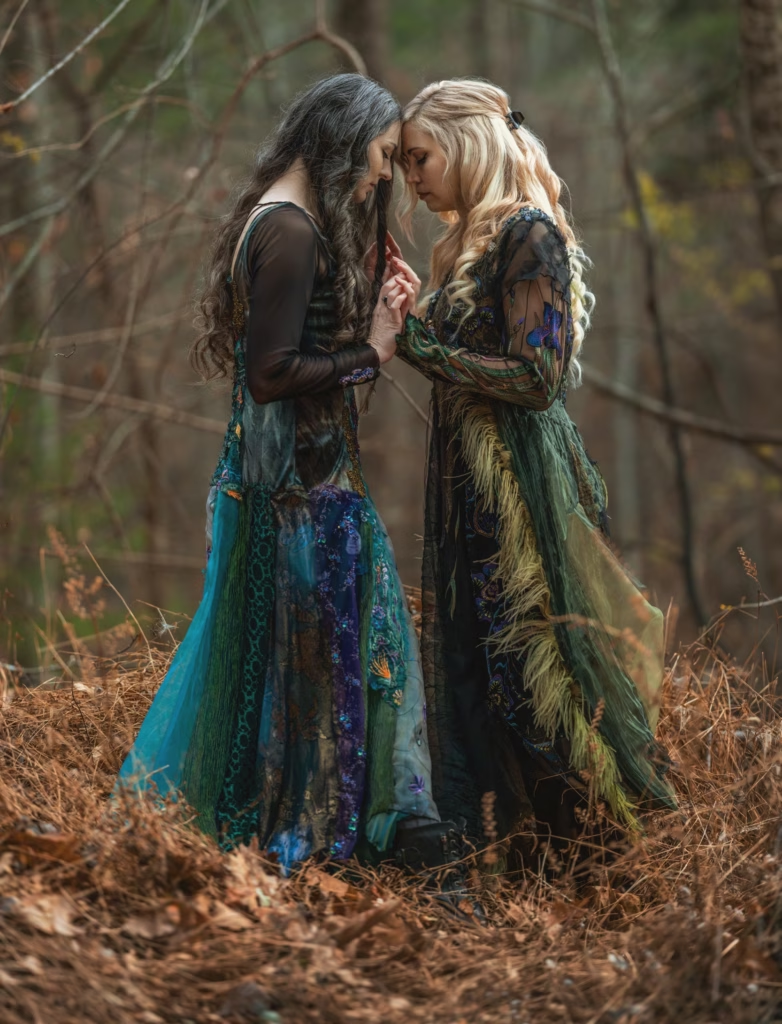
Six years I studied in the city, a train ride away from home. Every time I returned, my mother would tell me that Angelica was in love with someone new—the blacksmith, the wealthiest farmer in the valley, a passing soldier who had wandered through after being discharged. When I asked about them and warned her about falling in and out of love so easily, she would say, “I don’t see them in my future, so what does it matter? I may as well enjoy myself while I’m young. I have plenty of time to become serious, like you! I don’t know why you don’t have a boyfriend, Bertie. Aren’t there any students you could fall in love with? I think it would do you good!”
The tragedy happened in my final year at the university. My father fell ill. I went home immediately, wishing the train would go faster so I could be with my family. My mother and I together could not help him. We tried, how we tried! But our spells and potions could not cure his illness. Angelica was no help at all. She would look at the cards and tell us, “By the time autumn comes, he will not be sitting in his armchair.” I was so angry with her!
Especially when she turned out to be right. I forgave her when I saw how she cried at his funeral—as though she had wanted, so much, to be wrong about the future. Sometimes, it seems, the future can’t be altered, no matter how hard you try. The day after the funeral, my mother said, “Girls, I can’t run the mill by myself. I’m planning to sell it and move to the city. I’ve been offered a position at the university—it seems they need a professor of witchcraft.”
“But this is our home!” I said. “Where will we go? Where will Angelica go? She’s never lived anywhere else.”
“Don’t worry about me,” said Angelica. “I asked the cards this morning, and I poured out a cup of my favorite jasmine tea.”
“What did they say?” I asked, apprehensively.
“The cards and tea leaves agreed: They said we would go into business. You and I, together.”
For a moment, I stared at her. I was supposed to go into business with my sister because some cards and tea leaves had said so? I opened my mouth to tell her what a ridiculous idea that was. And then I said, “All right, Celery. Let’s go into business together.” And so we have, dear customers! We invite you to Two Sisters Fortunetelling and Apothecary on Lower Raven Street. It’s the first floor of an old house we bought from the sale of the mill. My mother and I live on the second floor. Angelica has the attic room she wanted, where she can hear rain pattering on the roof. Do you need advice about love or your career? Angelica will read the cards for you or make a pot of tea—jasmine, oolong, whatever you prefer. Drink it and learn about your past, present, and future! Do you have aches or pains, worries that keep you up at night? I’ll brew you a potion that will make you feel well again in no time. We also sell crystal balls, pendants shaped like the moon and stars, handmade brooms, shawls as delicate as spiderwebs, and of course textbooks for students of witchcraft. Don’t be surprised if Pandora greets you with a hoot from her perch!
Open 10 a.m. to 6 p.m., Monday through Thursday. We look forward to seeing you!
Follow Theodora Goss on Instagram @theodoragoss.
Photography by Steve Parke
Models:
Alessandra Pisano @alessandra_maria_pisano and Krystyn Tsagarakis @a.witch.in.the.woods
Owl: Niya
Gowns: Lee Andersen @leeandersenclothing