








J.R.R. Tolkien was a constant thread throughout my childhood. I vividly remember being upset when my hird-grade teacher introduced us to The Hobbit after we read A Magician’s Nephew by C.S. Lewis. How could I leave Narnia to join a short, stubborn little creature in his shire? The main characters seemed so old and jaded to me. But the journey and beauty of Bilbo Baggins eventually won me over. I found myself delving into the life of a character who was more hesitant to become a hero than I was to be his reader.
I think it was his relatable stubbornness and his affinity for four o’clock tea that first lured me into his hobbit hole. The hobbits, with their cottages hidden in the hills, shared their meals just as I longed to do with a friendly group of peers. The sounds of trickster stories told between friends felt familiar. And when it eventually became time for Bilbo to leave his beloved home, he bravely faced a world so much bigger than I could have imagined. A place where dragons hoarded generational wealth, swords defiantly glowed in the face of evil, and the influence of a single ring could change the fate of the world.
Oh yes, hobbits spoke to me.
When I was a child in the early 2000s, I lived in Colorado, and when I opened our front door every morning, the Rocky Mountains greeted me—some days with silver caps dusted in snowy white, others with the vibrant, exploding greens of spring.
My curious hands tickled moss on tree trunks, and I ran barefoot across dew-covered grass. The place I lived, so rich and bursting with life, felt like the lush landscape in Tolkien’s pages.
But it wasn’t until the trailers for the movie version of The Lord of the Rings started to play on my TV that I truly encountered Middle-earth for the first time. I was ecstatic. Those movies were unlike anything I had ever seen before—elves, sentient trees, dwarves, wizards, and so many other wondrous creatures who saved their world from a great evil. And I felt like part of it, because while I didn’t live in a world of magic, at least I had the mountains. Well, for a while.
When I was 11, my family moved from Colorado to the high plains of eastern New Mexico, where the land was flat for as far as the eye could see. Just high grass, tumbleweeds, and cows … so many cows. My mountains were too far away to greet me in the mornings or tuck the sun away at night. The distance revealed the tender, deep emotional connection I had with my environment; I felt like an important fragment of myself had been left behind.
Clovis, New Mexico, wasn’t completely unfamiliar—I’d visited family there every summer—but I felt displaced living in such desolate grasslands. Though we’d moved to be closer to family and I was grateful for that, the exchange would weigh on my heart for many years.
I found solace in my books, which still had their stories and their own mountains to visit. Epic stories like The Odyssey and Beowulf were part of my academic curriculum, but in between summer reading, I returned to Tolkien. In Middle-earth, I found refuge again. And a slightly older and wiser version of myself learned to appreciate not just the hobbits of the hills but also those who lived under the mountain: the dwarves.
As a middle schooler, I became sympathetic to Tolkien’s bearded women, which no one in the books seemed to believe existed. I was taller than most in my classes, and had an athletic build. Coaches praised me for a strength they wanted to see in me, and they tried to lure me with invitations to join their sports teams. But my reality didn’t fit the archetype my appearance suggested. I was always the most unathletic person on the team—clumsy, uncoordinated, shy, even dainty—so I quickly became useless, even invisible.
I told myself, “I’m a dwarf living with the high elves.” I felt like I was a bearded woman, a dwarf who belonged among other dwarves, living miles and miles away from her real home under the mountain. The people around me in Clovis felt larger than life. Each person was more worldly, talented, and intelligent than the next.
It was also at this age that I first understood the negative connotations of being labeled “Black” by those outside my race. To be a child and separated from others because of my appearance was hard for me to understand. But in The Lord of the Rings, elves fought with dwarves, dwarves mistrusted elves, orcs hated men, and so on. So I had some inkling about race relations. Naturally, I sided with the mountain folk, my fantasy cousins, the dwarves. The people small in stature yet mighty, the underestimated race. Tolkien helped me think about why conflict might take place between people who are different, as well as between dominant groups and less obviously successful ones.
Middle-earth is a special realm partly because so many different races work together to fight a great evil. While Sauron might use these differences to manipulate the races to turn against each other, ultimately it is each unique quality of these disparate people, united, that forces the darkness out of Middle-earth. Evil will always exist, but so will love. It’s love that gives Samwise Gamgee the strength to carry Frodo Baggins up Mount Doom. A moment’s empathy compels dwarves, elves, and men to fight together as the Army of the West and crush the evil standing at the Black Gate. Tolkien reminds us that there is power in friendship and cooperation across races.
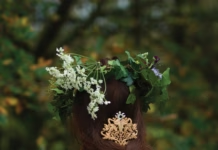
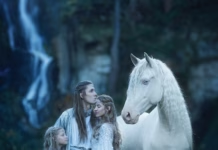
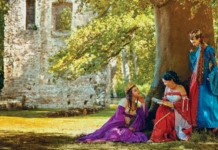
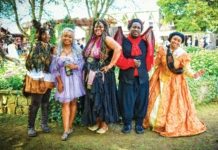
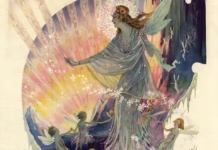
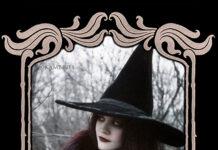
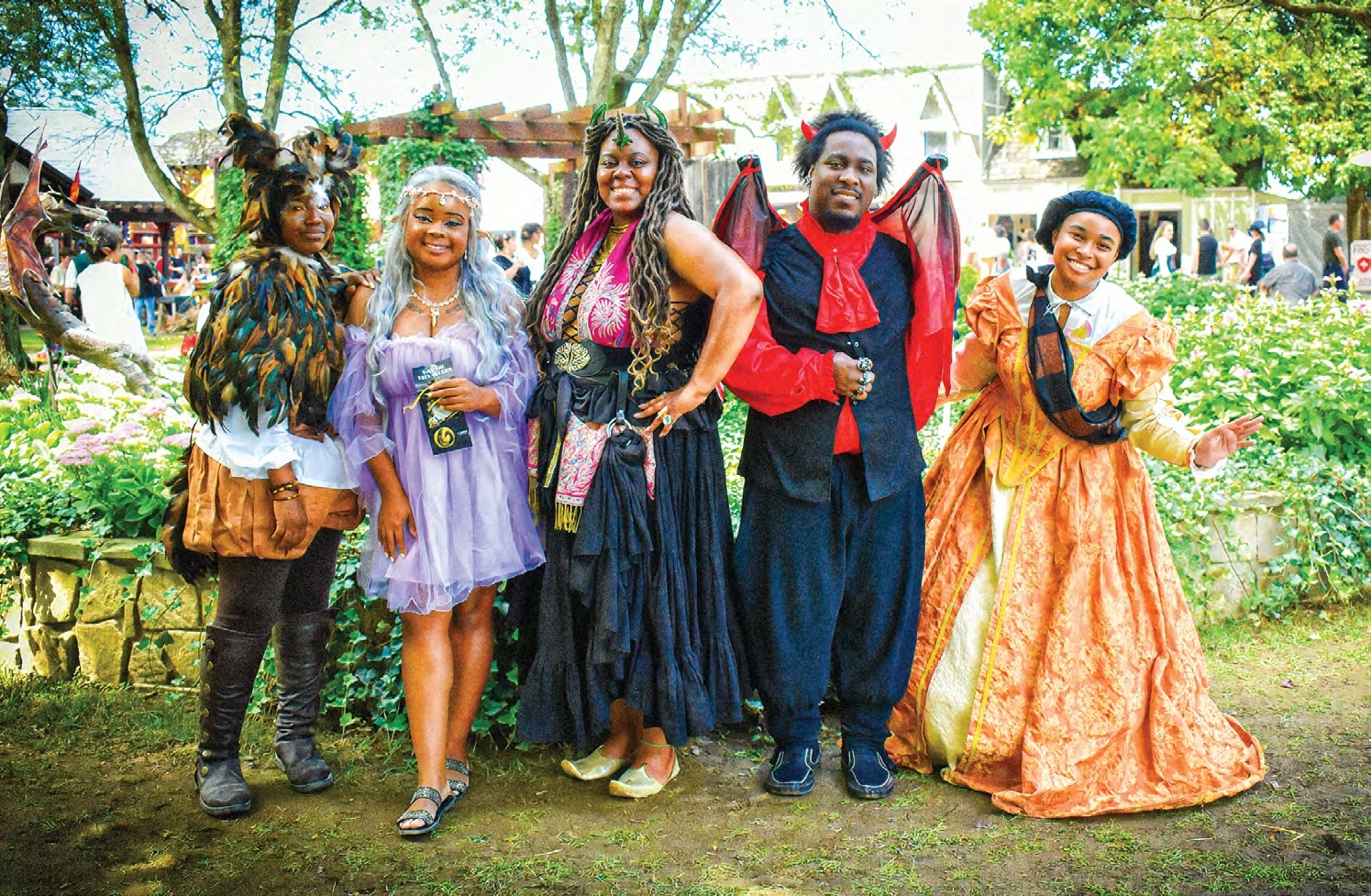
Now, as an adult, my bonds with diverse people teach me and affirm me: These connections help me to face the darkness that still wishes to turn race against race. I created Black Fae Day, a celebration of Black culture and my love for fantasy that’s taken place on the second Saturday of each May since 2021. People from all walks of life have supported it. When Black Fae Day first began, some of my elven friends offered monetary donations or mentorship. My fellow dwarves created art with their own hands, like costumes and other materials, and hobbits made space in their homes for feasts. And even my most human friends, those who had no connection to my love of fantasy, offered encouraging words and rolled up their sleeves to assist with mundane labor like putting up decorations.
Black Fae Day continues to exist because as much as I wish this next bit were fantasy, it’s as true now as it was in my high school: Even in the fae-friendly world, my skin’s hue still labels me as unworthy, less skilled, and uneducated. It’s an unfair reality that while people of all backgrounds turn to fantasy to escape, racial disparity lives in the fantasy world as well, in the narratives of people who’ve lived through wars of the past and seen what hatred toward your fellow human can do.
But a majority of us continue to band together, and to fight.
I hope people will always remember Tolkien’s stories. I hope his message of love and community melts the hearts of even the most coldhearted bigot. And I hope every bearded woman who feels unseen knows that she is capable of great things. I still feel like I am, at heart, that bearded woman, but I know I am capable of great things—and that armies stand with and behind me.
I still look for my mountains, my safe spaces. The rooms that feel like home. And I know, too, that Tolkien’s shires and rolling hills are always waiting for me.
Jasmine La Fleur reflects on growing up with Tolkien, finding kinship with dwarves, creating Black Fae Day, and discovering that home is found in community, courage, and the stories that shape us.