










Artist Erica Peebus believes the whole world is teeming with soul and spirit. But she’s interested in plants, especially, and creates paintings that illustrate their spirits. She calls herself a “spiritual botanical artist.”
The moon is core to her spiritual practice, which is why it shows up in so many of her paintings. Under the dark moon she performs ceremonial rituals in which she coaxes herself into a trance state and communicates with plant spirits. These meetings often provide the subjects of her paintings. She also does a deep dive with one plant every month, often ingesting it throughout the month (depending on its safety), learning about it, spending time with it, growing it or visiting it in the wild, and journeying with it during the dark moon.
An example is mugwort, which “is such a feminine spirit, one who speaks of time in cycles and phases” and for this reason is closely linked to the moon. Peebus describes her spirit journeys with plants as having a sense of water and the way it flows: “Some plants drip slowly, some are more like steam than liquid, others are like torrential downpours.” Mugwort, she says, “is a flowing river, one that feeds ecosystems and steadily nourishes.” This spirit is reflected in her painting A Mugwort Journey (p. 64), which features a waning crescent moon reflected in a river where a snake swims to shore to find a blue heron with open wings. Beneath this scene there’s an underworld where Kali dances in an egg-shaped cocoon, nested in the leaves of mugwort. Kali, she says, perfectly embodies the transformative power of facing the “underworld” aspects of life—confronting and dissolving the parts of oneself that cause fear, shame, and denial. Mugwort teaches us this lesson, she says: There is a time and place for all the aspects of the self, even those we tend to hide.
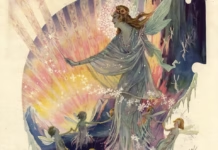
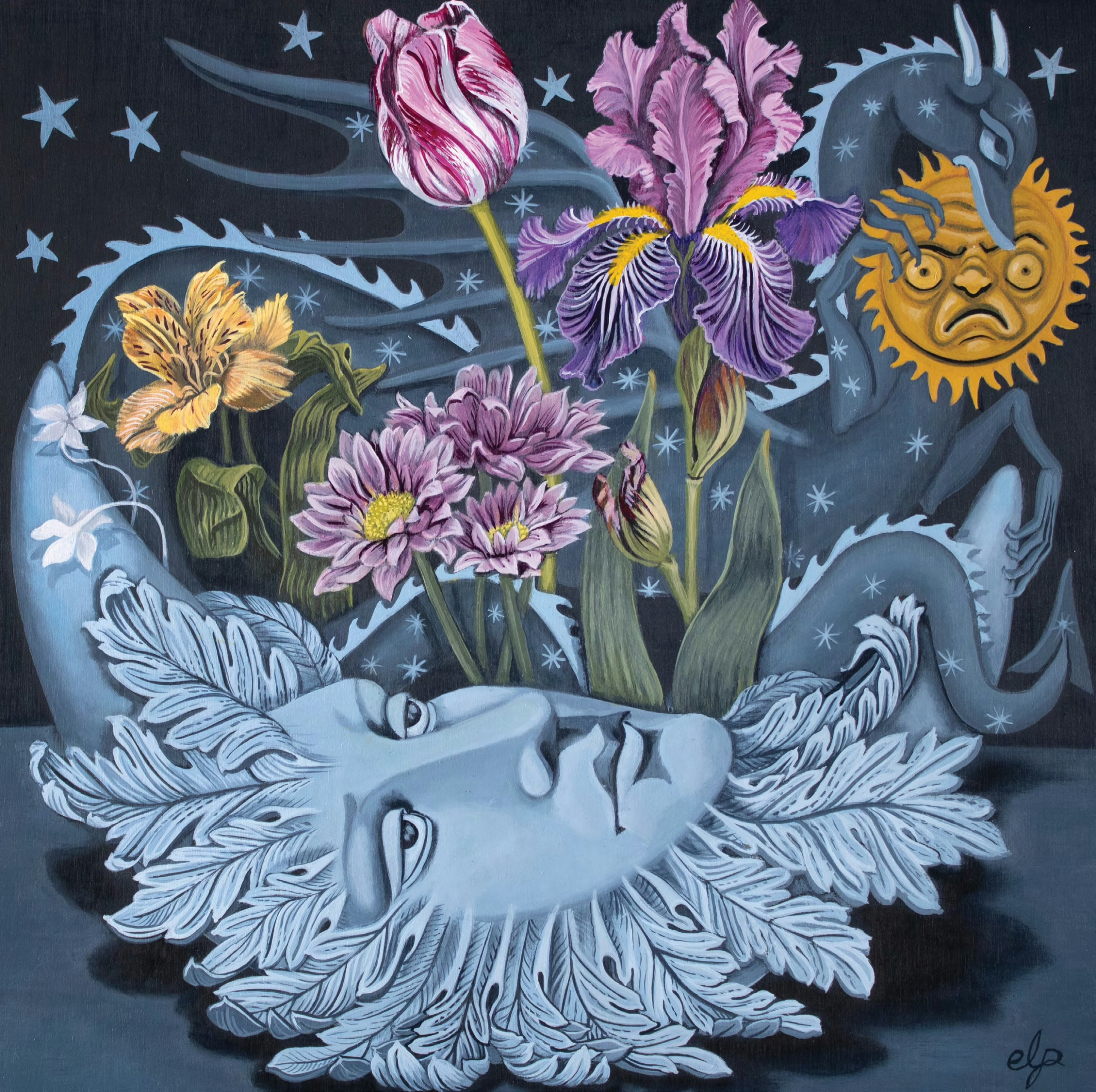
Bringing Down the Moon (left) is a nod to the Wiccan ritual of drawing down the moon, in which a high priestess calls upon the goddess (symbolized by the moon) to enter her body. This allows the goddess to speak through the priestess, sharing her wisdom, insight, and prophecy. In this painting, a dragon (another symbol Peebus uses often in her practice, to symbolize fate) has brought the moon a gift or an offering of the sun, which illuminates the moon and makes it the center of attention. “It’s an ancient power-grab turned on its head,” Peebus says.” Ultimately, it’s about the return of the matriarchal power structure and the fall of the patriarchy.”
What she hopes to say with her artwork is that there’s “more to life than the human experience.” “I hope when people see my work, they’re struck with an eerie familiarity, a déjà vu moment, where something reaches from beyond and grabs them, reminding them that there is more here, unseen and unnoticed. Something whispering in their ear, saying, ‘Look at this, this is meaningful.’” Her wish is for us to “step into our power, step into our communion with nature, and recognize ourselves as part of it.
Nature isn’t an object devoid of life or spirit—and neither are we.”
So how does she stay enchanted? By believing that there’s magic all around us. “I feel an energy pulsing through me, and I recognize that I am lit up by the same exact flame that’s inside of everyone I meet, and that the pulse of life in us is the same pulse in the plants, animals, and places that we call home.”
Visit Erica Peebus on Instagram @erica_peebus_art.
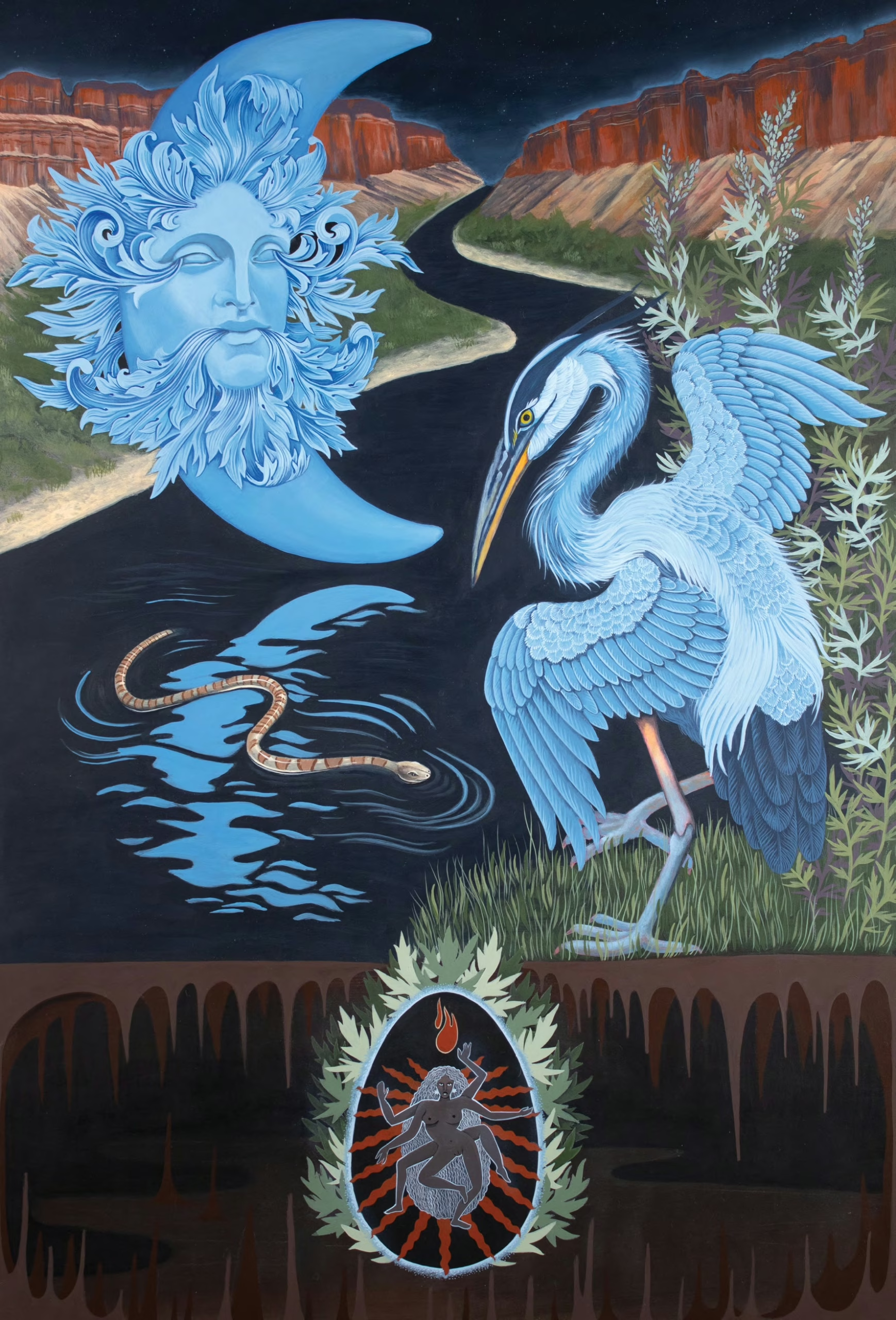
Artist Erica Peebus creates spiritual botanical paintings that explore communion with plant spirits, lunar ritual, and the living soul of nature. Through trance work, ceremonial practice, and deep relationships with individual plants, her visionary artwork invites viewers to reconnect with the unseen intelligence and magic woven throughout the natural world.