













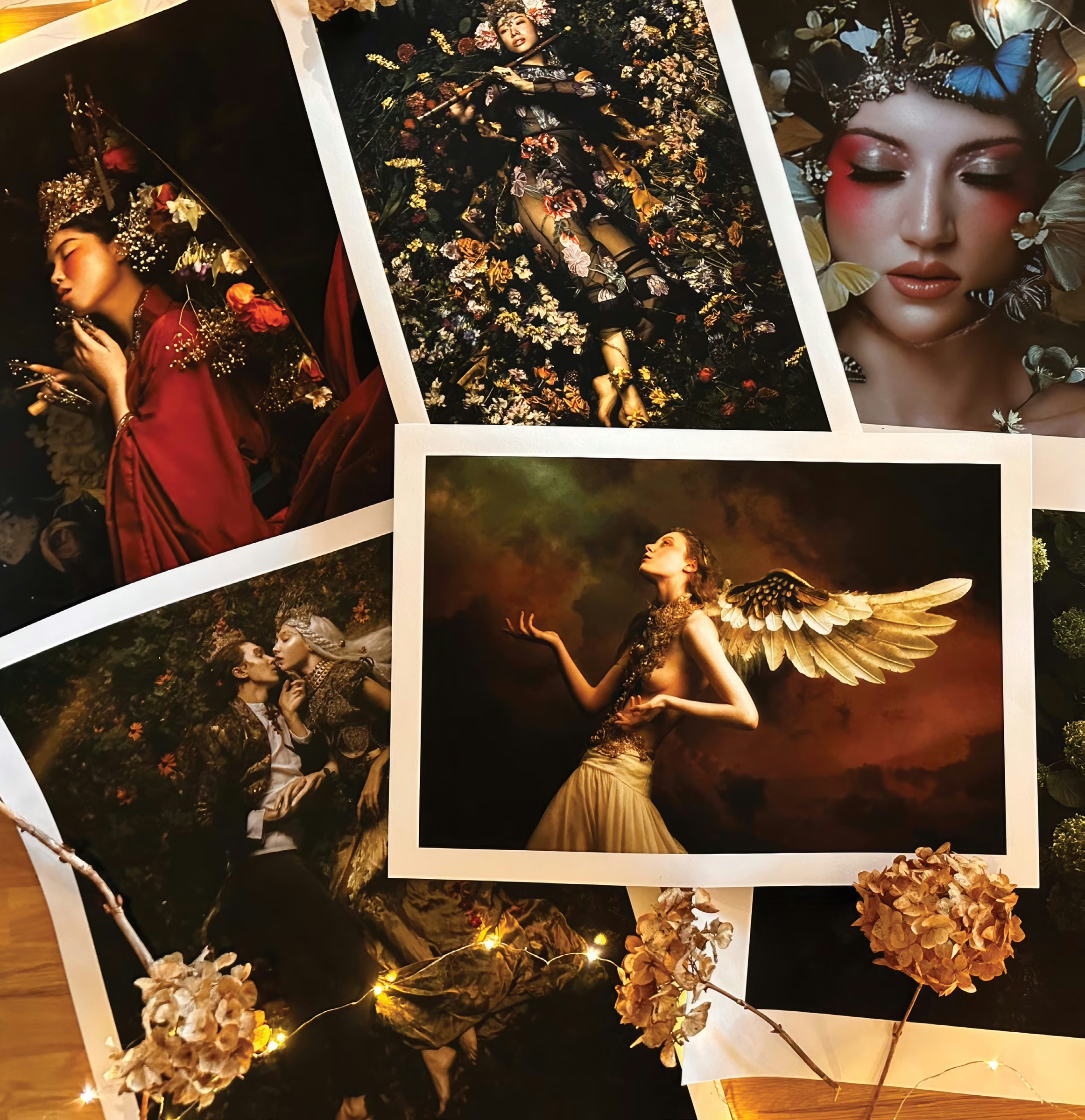
Photography by Bella Kotak
I’msure you remember that scene in Disney’s Cinderella: The fairy godmother waves r magic wand, and Cinderella’s rags turn into a gown fit for the princess she will come. Then she rides off in her pumpkin carriage to be the belle of the ball. The live-action version makes it even more dramatic. What took a moment in the animated version takes a full minute: Cinderella twirls and rises, and the dress transforms from pink rags into a blue fantasy while butterflies flutter around her, eventually settling to become the decorations that frame her décolletage. The makers of the live-action version knew something: This is an important moment worth focusing on. This is when the fairy-tale heroine transforms.
Of course, it’s not the only moment when Cinderella transforms, or even the most important. But let’s take a step back, because to understand what is happening in that scene, we need to talk about transformations in fairy tales. They’re everywhere. The most obvious are found in animal bridegroom tales like “Beauty and the Beast.” In Straparola’s “The Pig King,” the animal bridegroom is a pig who transforms into a man at night. Eventually, the woman he marries figures out his true identity and burns his pigskin, after which they live happily ever after. The same general plot appears in stories such as “The Black Bull of Norroway,” in which the animal bridegroom is a bull, and “East of the Sun and West of the Moon,” in which he is a bear. However, in those stories, when the woman who marries the animal bridegroom finds out who he truly is, he disappears, and she must go on a quest to find him again. She must mourn her lost love, toil and endure travails to be reunited with him, and then use both the gifts she has been given along the way as well as her own wits to win him back. In other words—she has to go through her own internal transformation.
This is a less obvious transformation than from pig to prince, but it’s just as important. At the beginning of the fairy tale, the female character was passive—now she becomes active. She did not know whom she was married to—now she knows, and she must fight to regain her beloved. In the process, she becomes a heroine. This internal transformation from victim to heroine happens in many of our most famous and familiar fairy tales.
Let’s go back to Cinderella. The transformation from rags to ballgown takes only a minute, but Cinder started changing and growing long before: when she mourned her mother and then had to welcome her stepmother and stepsisters. When she learned how to cook and clean and do all the chores that her stepmother assigned her, because after all, as the daughter of a wealthy man, she would not have known how to do any of those things. When she sewed a dress for herself, hoping to go to the ball. Slowly, over years of growing up, Cinder learned how to do things for herself—well, with the help of some singing mice. Of course, each version of the story is a little different. In the Grimm Brothers’ “Aschenputtel,” the ash girl plants a tree on her mother’s grave, waters it with her tears, and is helped by the birds that nest in that tree. Like Cinderella, she gains animal helpers.
We also see an animal helper in “The Goose Girl,” in which a princess is forced to switch places with her own maid, who wants to marry the prince in her stead. The princess must work as a goose girl and fend for herself, with only the head of her horse Falada to advise her. This theme of learning to work, whether by tending geese or keeping house, runs through fairy tales about female characters. Snow White learns to keep house for the seven dwarves. Donkeyskin cooks and scrubs pots in the castle kitchens. Vasilisa the Fair must satisfy the housekeeping demands of Baba Yaga. Luckily, Vasilisa also has a helper, the doll her mother gave her. Dolls are associated with childhood, but the transformation of the fairy-tale heroine is usually from child to adult, and it is connected in some way to sexual maturity. Rapunzel transforms when the prince starts visiting her tower—she rejects the control of her surrogate mother, the witch. In an earlier version that the Grimms revised to make it more child-friendly, the witch throws her out because Rapunzel is pregnant. When the wicked queen visits Snow White in the dwarves’ cottage, she brings poisoned stay laces, a poisoned comb, and finally the famous poisoned apple. All three items are connected with beauty and sexual appeal—the apple is also a symbol of forbidden knowledge. In other words, Snow White is growing up.
We could go into a number of other examples, such as the patient girl in “Six Swans” who knits shirts out of “star-flowers” for her swan brothers, even while she herself gets married, bears children, and is then accused of murdering them. Or “Brother and Sister,” in which the sister must endure death itself before her brother, who has been turned into a fawn, can regain his human shape. She too is married and becomes a mother in the course of the tale. And then there is Maid Maleen, who is locked in a tower when she vows to marry the prince she loves rather than her father’s choice for her. She finally gets her prince, but only after freeing herself by long, patient labor and then working in the castle kitchens (which always seem to have entry-level positions for downtrodden princesses). We could go on and on.
But what does this mean for us, if we want to be the heroines of our own stories? Fairy tales were not originally told as idle pastimes. They were entertaining, sure. But they also encoded cultural wisdom, passed down from generation to generation. What do these tales about fairy-tale internal transformations tell us?
- Who you are is not who you will become. Fairy-tale heroines always start in one place and end up in another. There you are, with a wealthy father—maybe he’s even the king! But you might end up being a goose girl or working in Starbucks for a while. Or you could be the daughter of a poor man, like Rapunzel. That doesn’t mean you’re going to be in rags all your life. You have endless possibilities. But …
- You need to learn to stand on your own two feet. Wherever you start, something is going to happen to destabilize that comfortable world. Your mother will die, your father will remarry, you’ll be forced to marry a bear—you know, stuff happens. You will need to learn to take care of yourself. Sometimes that will involve living in the forest or New York City. Sometimes it will involve climbing a glass mountain or the corporate ladder in iron shoes. You may need to deal with witches of various sorts. But without some trials, you won’t get where you’re going—or more importantly, become the person you want to be.
- You need to learn to accept help along the way. There will be friends and helpers. There always are—you just need to look for them, or maybe ask for help. Remember that Ashenputtel had her birds, the Goose Girl had Falada, and Vasilisa had her doll. When the heroines of “The Black Bull of Norroway” and “East of the Sun and West of the Moon” went on their quests, they were each given three items by wise old women. (By the way, always listen to wise old women. Like the Fates, they know what’s going on.) Of course, Snow White had seven dwarves to advise her, not that she listened! But the fairy-tale heroine (that’s you!) is seldom alone, so look for your network.
- You need to learn to do some sort of work. We all do, right? Whether it’s cleaning for Baba Yaga, making shirts out of star-flowers, tending geese—or being a nurse, lawyer, middle-school teacher (which is probably the hardest job of all). Living in a fairy tale doesn’t mean getting out of making a living for yourself. Sure, Cinderella eventually gets to be a princess, but have you seen how hard princesses work nowadays? Learn to do something, and do it well. The Tsar marries Vasilisa because no one can spin and weave and sew like she can—he may admire her beauty, but it’s her skillful needlework that gets her the job.
- Accept that you are growing, and also growing up. Wouldn’t it be lovely to stay a child, with no responsibilities? Fairy tales tell us that’s not going to happen. You’re going to change and grow, no matter what. And that’s a good thing, because if you lived happily ever after from the beginning, there would be no story. You need to lose things, work hard, journey through the world. You may even need to die (metaphorically), so you can be reborn smarter and stronger than you were before. Through it all, you will grow up—which is a process that will take the rest of your life. Fairy tales end happily ever after, but they are metaphors for processes that take place throughout our lives. At any point, we can set out from home, venture into a dark forest, find a cottage in the woods, learn a new trade, make a new friend, wake up and realize we have been asleep for a long time. At any point, we can find a partner who may look a little Beastly but turns out to be a prince, or meet wise women who give us the gift of their insight. At any point, we can change from rags into a ballgown and go to the ball (with or without the help of a fairy godmother or singing mice).
Whenever we want, we can become a fairy-tale heroine—smart and brave and, with the right accessories, fabulously dressed for the ball.